A note from Steve Addington:
My friend recently taught me what a stud is in terms of female personality types. I admit at first I didn’t like the sound of it until later on I realized maybe they are actually attractive. Take Avril Lavigne for an example. She’s an Emo Skater Punk Stud. So maybe I’m into studs after all just like Druski.
Hope you enjoy the rest of this read we’ll go over some numbers here to fit my hypothesis.
Thanks,
Steve Addington
Key Points
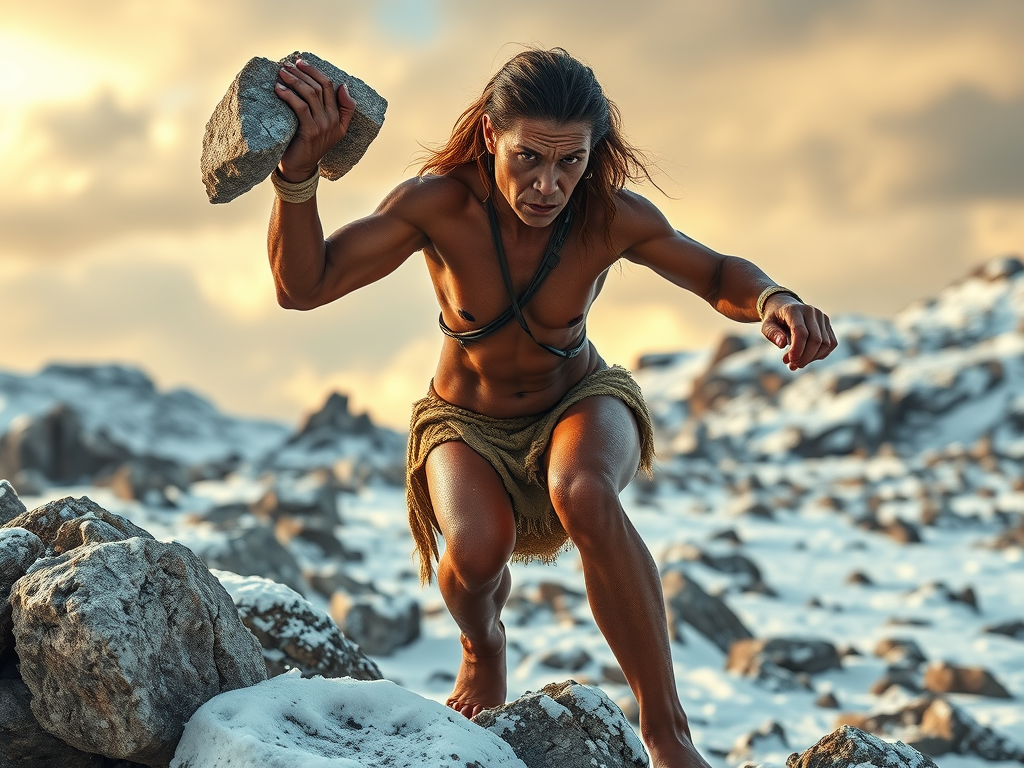
- Neanderthal females were exceptionally strong, with muscular builds that likely made them stronger than many modern human males.
- Their robust physique suggests higher testosterone levels, although exact measurements are unknown.
- Estimates suggest Neanderthal females could bench press 150-200 kg (330-440 lbs) and deadlift 200-250 kg (440-550 lbs), far exceeding average modern human capabilities.
- Despite being shorter (155-160 cm) and lighter (66.4 kg) than modern males, their strength was phenomenal relative to their size.
Physical Strength and Comparisons
Neanderthal females were adapted for survival in harsh Ice Age environments. Their skeletal remains show thick bones with strong muscle attachment sites, indicating impressive physical power.
| Trait | Neanderthal Female | Modern Human Male (Average) |
|---|---|---|
| Height | 155-160 cm (5’1″-5’3″) | 175 cm (5’9″) |
| Weight | 66.4 kg (146 lbs) | 80 kg (176 lbs) |
| Bench Press (Estimate) | 150-200 kg (330-440 lbs) | 70-100 kg (154-220 lbs) |
| Deadlift (Estimate) | 200-250 kg (440-550 lbs) | 100-150 kg (220-330 lbs) |
| Build | Stocky, muscular | Varies, typically less robust |
These estimates highlight that Neanderthal females could easily outlift most modern men. This strength was critical for their lifestyle, which involved hunting large game, carrying heavy loads, and enduring physically demanding daily activities.
Testosterone and Masculine Qualities
While fossil analysis cannot directly measure testosterone levels, their muscular build implies higher levels than modern females, or similar hormonal balances promoting muscle mass and bone density. This physical robustness was an adaptation to cold climates and hunting life, where power and explosive strength were more advantageous than endurance running, which is a hallmark of Homo sapiens.
Cognitive Capacity and Lifestyle
Neanderthal females also had larger brain volumes than modern human females, averaging around 1,460 cc, suggesting considerable cognitive ability. Archaeological evidence indicates they engaged in complex social behaviors, including:
- Tool-making and fire use
- Symbolic practices such as burial of the dead
- Possible language capacity, based on the structure of their hyoid bones and FOXP2 gene presence
Their societies likely required cooperation, communication, and strategic thinking, demonstrating that their strength coexisted with intelligence and adaptability.
Attraction and Social Context
The term STUD in this context describes females with masculine physical qualities who still fit traditional feminine social roles and attractions. Neanderthal social structures included family units, caregiving, and possibly pair bonding similar to modern humans. This blend of strength and social cooperation highlights their balanced role as powerful yet nurturing members of their communities.
Evolutionary Significance
Neanderthal DNA continues to influence modern humans, particularly in genes related to immunity, metabolism, and even muscle growth. Studies have found that certain Neanderthal genetic variants can increase physical strength in modern carriers, underscoring the impact of their robust biology on our species today.
Conclusion
Neanderthal females were true STUDs – individuals with muscular builds, exceptional strength, and possibly higher testosterone levels, making them stronger than many modern human males. Their height (155-160 cm) and weight (66.4 kg) were less than modern averages, but their robust physique and adaptations for power highlight a unique blend of masculine and feminine traits.
They were not just strong; they were intelligent, adaptable, and essential to their communities’ survival, providing a fascinating glimpse into our evolutionary past.
Sources:
- Natural History Museum – Who were the Neanderthals?
- Wikipedia – Neanderthal Anatomy
- ScienceDirect – Neanderthal Adaptive Trajectories
- Smithsonian Institution – Homo neanderthalensis
This post was created with the help of Grok3 and ChatGPT-4o in conjunction with Steve Addington’s insights on human evolutionary strength and anthropology.




Leave a Reply