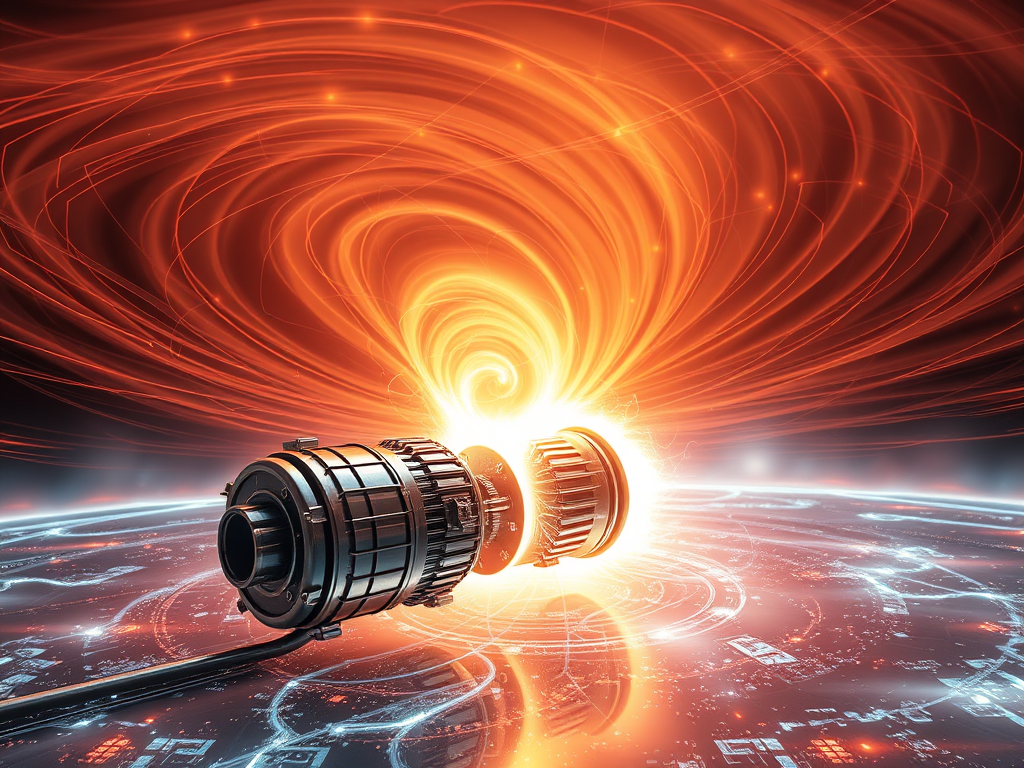
In this post, we’ll dive deep into the world of pressurized plasma mercury engines, focusing on the mysterious mercury vortex. We’re going to look at how feasible this tech is, walk through the steps to make it happen, and check out the experiments that have laid the groundwork, drawing from some cool research along the way.
Understanding Plasma Engines and Mercury Vortex
Typically, plasma engines run on gases like xenon or krypton, but mercury? That’s where things get interesting. With its high conductivity, mercury can form a vortex under magnetic influence, potentially revolutionizing how we think about propulsion.
Mercury Vortex Phenomenon:
- Vorticity: When you zap mercury with a magnetic field, it swirls into a vortex. This isn’t just cool to look at; it could make engines more efficient by reducing friction and keeping plasma where we want it.
- Applications: Imagine this vortex not just pushing a craft but also acting as a natural container for plasma, making everything smoother and more controlled.
Feasibility of Mercury Plasma Engines
- High Specific Impulse: Because mercury is heavy, we might get more bang for our buck in terms of thrust, perfect for long space trips or supersonic jaunts.
- Conductivity for Vortex Formation: This ability to form a vortex through electromagnetic wizardry opens up new avenues for propulsion tech.
Supporting Research:
- The ancient Vaimānika Shāstra talks about mercury-powered flying machines, giving us a historical nod to these ideas (Shivanandam, 2015).
- More scientifically, studies have looked at stabilizing plasma with vortex-electromagnetic tricks (Guman, 1967).
Steps to Develop a Mercury Plasma Engine with Vortex
- Material Selection: We need stuff that won’t melt or react badly with mercury under those intense conditions.
- Mercury Handling: Let’s keep it safe, folks. We’ll need systems to manage mercury without turning our planet into a toxic mess.
- Magnetic Field Generation: Got to have those magnets on point to make and keep that vortex spinning.
- Ionization and Plasma Management: We’ll use some fancy methods like RF or microwave heating to turn mercury into plasma, with the vortex keeping it all in check.
- Thrust Generation: Experimenting with how we can tweak that vortex for optimal thrust.
- Safety and Environmental Considerations: No compromises here; we need strict safety measures and green recycling for mercury.
Experiments and Research
- Visual Demonstrations: YouTube’s Roobert33 gives us a visual feast of mercury vortex in action.
- Historical References: Ancient texts might be folklore, but they’ve sparked modern interpretations (Varghese, 2013).
- NASA’s Research: They’ve played with mercury in ion thrusters, showing us it’s not just sci-fi (Sovey et al., 1989).
- Simulation and Modeling: Computers help us predict how this vortex behaves in an engine (Quick, 1969).
Challenges and Future Outlook
Mercury’s toxicity is a big deal, and while the vortex idea is promising, it needs a lot more work. We’re talking breakthroughs in materials, magnet tech, and plasma physics. Experts are already debating how we can make this sustainable (Wilbur et al., 1991).
Conclusion
The mercury vortex could be the game-changer in propulsion, but we’ve got our work cut out for us. Here at HypersonicVIP.club, we’ll keep you posted on every twist and turn. Stay tuned for more on the cutting edge of aerospace!


 Hypersonic VIP Club
Leave a comment